Redesign the chain, not the step: building end-to-end AI workflows
Using AI to draft one email or summarise one call saves minutes. The larger gains come from redesigning the whole chain of work, so the output of one step becomes the input to the next without someone copying and pasting in between.
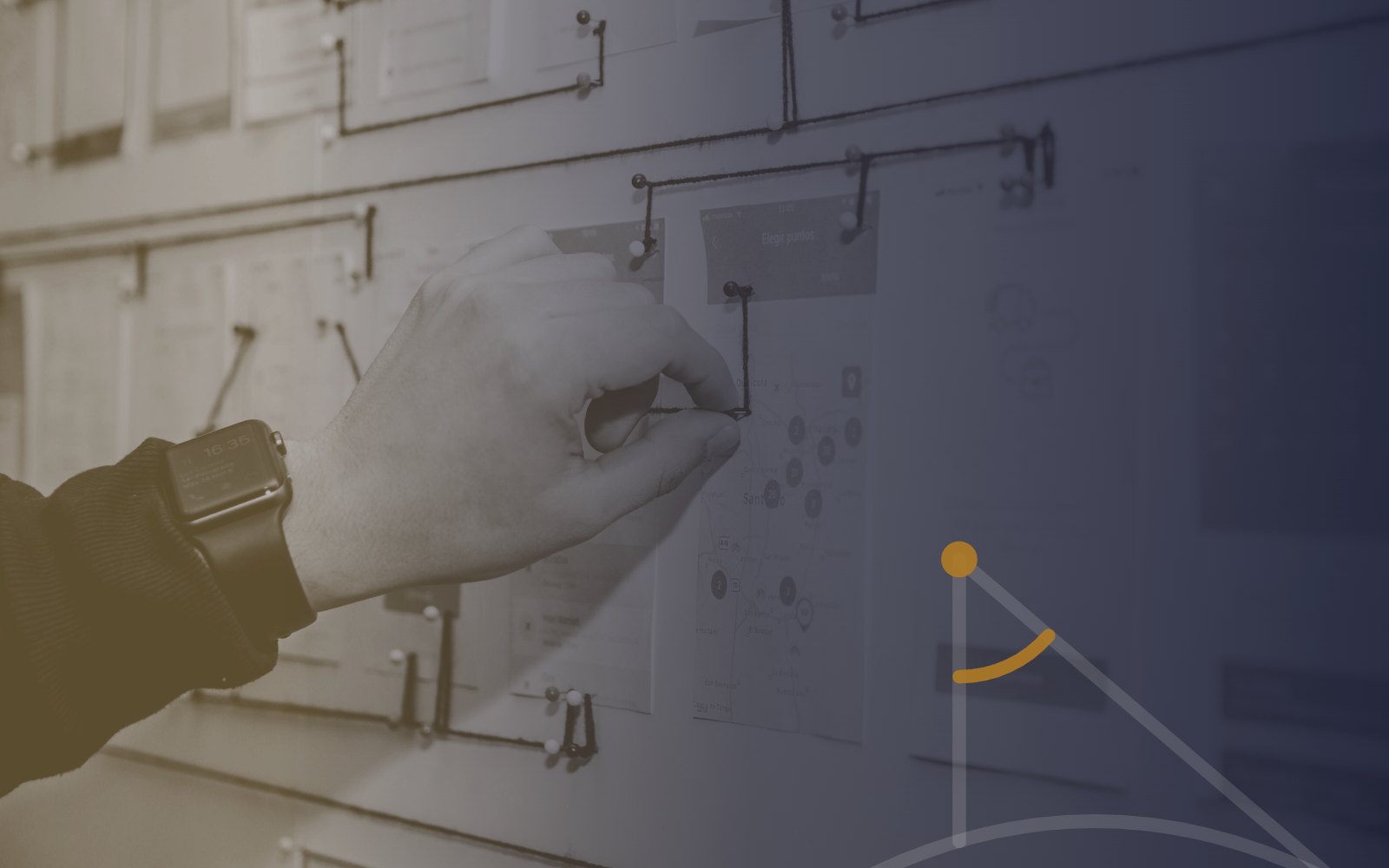
Most people's first year with AI looks the same. They use it for single tasks: a first draft, a meeting summary, a rewrite. Each one saves a few minutes. Then the saving stalls, because the work around the task has not changed. Someone still exports the file, pastes it into the tool, checks the result, reformats it and sends it on to the next person.
The next step is process design: looking at the full sequence of work from trigger to outcome and asking which steps should exist at all. Gains on that scale do not come from a better prompt. They come from removing handoffs.
Map the chain before you touch a tool
Pick one recurring piece of work with a clear start and finish: a client onboarding, a monthly board pack, a supplier invoice from receipt to payment. Write down every step, who does it, what they receive, what they produce, and how long the work waits before the next person picks it up. In most chains we map, waiting time exceeds working time.
Then mark each step as one of four kinds. A fixed rule, which should become ordinary code. A judgement call that needs a person, which stays with a person. A language task such as reading, extracting, drafting or classifying, which is a candidate for AI. And a handoff that exists only because two systems do not talk to each other, which should be removed.
The gains do not come from a better prompt. They come from removing handoffs.
What a connected workflow looks like
Take a supplier invoice. Today it arrives by email, someone opens it, keys the fields into the accounting system, checks it against the purchase order, chases discrepancies and routes it for approval. Redesigned, the invoice is read and its fields extracted as it arrives, matched against the purchase order by a rule, and routed straight to approval when everything agrees. Only the mismatches go to a person, with the discrepancy already described. That person's job changes from data entry to exception handling.
The pattern repeats across most back-office work. AI handles the reading and drafting, ordinary software handles the rules and the routing, and people handle the exceptions and the decisions.
Build checkpoints into the chain
Connecting steps also connects errors. A mistake at step two that used to be caught when someone retyped the data now flows straight through to step six. Every connected workflow needs checkpoints: validation rules between steps, confidence thresholds that send uncertain cases to a person, and a log of what each step received and produced so a failure can be traced.
Put human review where it carries the most weight: before anything leaves the organisation, moves money, or changes a record that others rely on.
Start with one chain, then measure it
Do not redesign everything at once. Choose one chain where volume is steady, the rules are mostly written down and the end-to-end time is already measured. Run the new version alongside the old for a few weeks, compare cycle time, error rate and the share of cases handled without a person, and only then retire the old process. The second chain goes faster, because the components (extraction, matching, routing, logging) carry over.
- MIT Sloan Management Review, 5 things to consider when working with AI, further reading on redesigning work around AI. mitsloan.mit.edu
- The invoice example is a composite drawn from Biruni Applied AI engagements, not from published research.
- —Single-task AI use plateaus because the work around the task stays the same.
- —Map the full chain and classify each step: fixed rule, judgement, language task, or avoidable handoff.
- —AI reads and drafts, software applies rules and routes, people handle exceptions and decisions.
- —Connected steps connect errors: add validation, confidence thresholds and logging between steps.